
Why Paid Growth Keeps Resetting to Zero
A Kuwait e-commerce brand runs a strong month on Meta and Google. Revenue is up 30 percent. The founder green-lights more budget. The next month, cost per acquisition doubles and nobody can explain why.
This pattern is common across Kuwait e-commerce brands, and the cause is rarely the platforms or the creative. It is the absence of an acquisition system. A structure that tells the team how budget moves between channels, what triggers a scale-up or a pause, and how performance is judged beyond last week's return on ad spend.

Kuwait e-commerce brands operate in one of the highest digital ad cost markets in the GCC, with a small, highly connected consumer base and heavy reliance on Instagram and Google Shopping for discovery. Without a repeatable acquisition system, that combination turns paid growth into a monthly guessing game instead of a compounding asset. This post breaks down what an acquisition system actually is, the hidden costs of skipping one, and a four-layer framework Kuwait e-commerce teams can use to make paid growth structurally repeatable.
Acquisition System vs Campaign Management: What's The Difference?
What Is an Acquisition System?
An acquisition system is defined as the documented structure of budget allocation rules, channel-level roles, and performance checkpoints that governs how a business acquires paying customers through paid media, independent of which person is executing campaigns on a given day.
It is not a media plan. A media plan describes what will run this month. An acquisition system describes the rules that decide what a media plan should look like every month, based on repeatable triggers rather than individual judgment calls.
What Is Campaign Management?
Campaign management refers to the tactical, day-to-day execution of individual ad campaigns: writing ad copy, setting audiences, adjusting bids, and reading dashboards. It is a necessary layer, but it operates inside whatever structure the acquisition system provides, or in the absence of one, inside whatever the manager happens to remember from last quarter.
Why the Distinction Matters.
Any e-commerce brand can simultaneously have:
A skilled media buyer producing strong weekly campaign results
No system-level structure, meaning results reset every time strategy shifts or staff changes
Vanity metrics can fool you into optimizing for the wrong outcomes. The question is never how much revenue did a channel generate, but how repeatable was the process that generated it. — Lean Analytics by Alistair Croll and Benjamin Yoskovitz
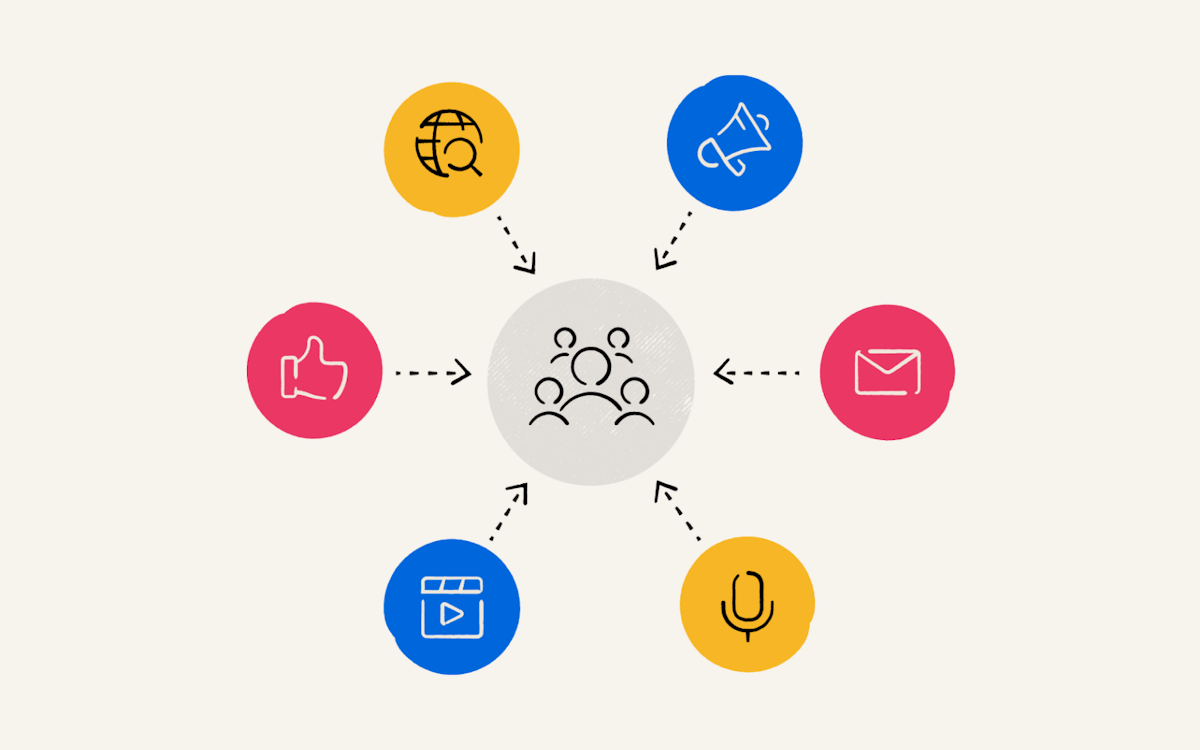
Strong campaign execution without a system-level budget structure produces performance that looks good in isolated weeks but cannot be reliably reproduced, forecasted, or scaled month over month.
The Core Problem: Fragile Budgets Produce Fragile Growth
Budget Decisions Made Campaign by Campaign, Not System by System
Most Kuwait e-commerce brands allocate budget based on which campaign performed best last week. This feels rational, but it means the entire acquisition strategy is rebuilt from scratch every reporting cycle, with no accumulated logic about what actually drives durable growth for that specific brand and market.
The Kuwait Market Compounds the Risk
Kuwait's digital population is smaller and more saturated by paid social than most GCC markets, which pushes cost per click higher during peak shopping periods such as Ramadan and the back-to-school season. A brand reallocating budget reactively, rather than through a structured system, tends to overspend into rising costs right when competitors do the same, and underspend during quieter windows when acquisition is actually cheaper.
In a small, high-competition digital market like Kuwait, reactive budget allocation systematically buys media at its most expensive moments and withdraws from it at its cheapest, which is the opposite of what a structured acquisition system would do.
Hidden Costs of Running Kuwait Paid Media Without a System
1. Channel Roles Are Undefined
Without a system, every channel is expected to directly drive last-click sales, including channels like paid social prospecting that are structurally better at building awareness than closing purchases. This causes teams to defund top-of-funnel channels the moment ROAS (return on ad spend) dips, cutting off the pipeline that feeds conversion channels a few weeks later.
2. No Pre-Agreed Scaling or Pause Triggers
Decisions to scale up or pause a campaign are made emotionally, in the moment, usually in response to a single bad day. A documented system defines in advance what performance threshold, sustained over what time period, justifies a change.
3. Currency and Payment Friction Get Ignored in Budget Planning
Kuwait's e-commerce checkout still relies heavily on cash on delivery, known locally as COD, and KNET, Kuwait's national debit payment network, alongside card payments, and the split materially affects true customer acquisition cost, or CAC, once failed COD deliveries and return logistics are factored in. Acquisition systems that only track cost per click or cost per purchase, without adjusting for fulfillment success rate, consistently overstate channel efficiency.
4. Budget Planning Happens Annually, Not Systematically
Many Kuwait e-commerce brands still set an annual marketing budget once and adjust it informally through the year. A system requires a living budget structure that reallocates on a defined cadence based on data, not a static number revisited only when leadership asks for a report.
The 4-Layer Acquisition Architecture
The 4-Layer Profitability Audit (4-LPA)
This framework structures paid acquisition budget across four layers so that performance becomes a property of the system, not of any single campaign or person running it.
Layer 1: Budget Allocation Rules by Channel Role
Every channel is assigned a role before a single dirham is spent: Discovery (top-of-funnel reach), Consideration (retargeting and comparison), or Capture (bottom-funnel conversion, including lead magnets such as budget templates or calculators). Budget percentages are set per role, not adjusted campaign by campaign.
Acquisition System Readiness = (Documented Budget Rules + Defined Channel Roles + Named Scaling Triggers + Recurring Reallocation Cadence) ÷ 4
Layer 2: Named Scaling and Pause Triggers
Define in writing the specific, sustained performance threshold that triggers a budget increase, decrease, or pause for each channel role. For example: a Capture-role campaign holding cost per acquisition within target for 10 consecutive days qualifies for a 20 percent budget increase; a Discovery-role campaign is evaluated on cost per thousand impressions and reach, not conversions.
Layer 3: Fulfillment-Adjusted Cost Metrics
Adjust cost per acquisition figures for COD failure and return rates before comparing channel performance. A channel that looks cheaper on cost per purchase can be structurally more expensive once fulfillment reality is applied.
Fulfillment-Adjusted CAC = Ad Spend ÷ (Confirmed Delivered Orders, not Orders Placed)
Layer 4: Recurring Reallocation Cadence
Set a fixed cadence, typically bi-weekly for fast-moving e-commerce, to review the first three layers together and reallocate budget. This replaces ad hoc, emotional reallocation with a scheduled, structural decision point.
The purpose of an acquisition system is not to guarantee a higher return on ad spend in any single month; it is to guarantee that this month's performance data actually improves next month's budget decision, rather than being discarded and re-argued from scratch.
ROAS vs a Structured Acquisition System Comparison
Dimension | Campaign-by-Campaign ROAS Chasing | 4-Layer Acquisition Architecture |
Budget decisions | Made weekly based on last period's ROAS | Made on a fixed cadence against pre-agreed triggers |
Channel evaluation | All channels judged on last-click conversion | Each channel judged against its assigned role |
Cost per acquisition | Based on orders placed | Adjusted for COD and return fulfillment rates |
Response to a bad week | Reactive budget cuts or panic scaling | No action unless the named trigger threshold is met |
Outcome over 6 months | Performance resets with every staff or strategy change | Performance compounds because the structure persists |
Real-World Example: A Beauty Brand That Stopped Guessing Its Budget
Consider a mid-size Kuwait City beauty and personal care e-commerce brand running Meta, Google Shopping, and Snapchat, with a monthly paid media budget of roughly 15,000 Kuwaiti dinars.

Before adopting a structured system, the brand allocated budget based on whichever channel had the best ROAS the prior week, typically Meta retargeting. Discovery-stage prospecting on Google Shopping was cut repeatedly because it showed a lower immediate ROAS, even though it was the primary source of new customers entering the funnel.
Within two quarters, new customer growth stalled even though retargeting ROAS looked strong, because the retargeting pool was no longer being replenished with new prospects.
After restructuring around the 4-Layer Acquisition Architecture, the brand fixed a 40/35/25 split across Discovery, Consideration, and Capture roles, set a named trigger requiring 10 consecutive days of target cost per acquisition before scaling any channel, and adjusted cost per acquisition for its roughly 18 percent COD failure rate. New customer acquisition became steadier month to month, and the team could finally forecast the next quarter's budget instead of re-deciding it from zero every four weeks.
Practical Takeaways for Kuwait E-Commerce Teams
Assign every active channel a role (Discovery, Consideration, or Capture) in writing before the next budget cycle.
Write down the specific, sustained performance threshold that would trigger a budget change for each channel, before you need to make that decision under pressure.
Adjust cost per acquisition for COD failure and return rates before comparing channel efficiency, especially during Ramadan and back-to-school peaks.
Set a fixed, calendar-based reallocation cadence, such as bi-weekly, rather than reallocating whenever a number looks alarming.
Document the acquisition system on paper or in a shared template so performance logic survives staff turnover and agency transitions.
Conclusion: The System Is the Asset, Not the Campaign
Paid acquisition in Kuwait's e-commerce market is expensive enough, and the customer base concentrated enough, that brands cannot afford to relearn the same lessons every quarter. A campaign is a decision. A system is the accumulated memory of every good decision a team has already made, applied automatically the next time similar conditions appear.
"A system produces what a system is designed to produce, no matter who is operating it. If you want different results, redesign the system, not the person." — The E-Myth Revisited by Michael E. Gerber
Paid acquisition in Kuwait's e-commerce market is expensive enough, and the customer base concentrated enough, that brands cannot afford to relearn the same lessons every quarter. A campaign is a decision. A system is the accumulated memory of every good decision a team has already made, applied automatically the next time similar conditions appear.
The brands that scale paid growth sustainably in Kuwait are not the ones with the best single month of ROAS. They are the ones whose acquisition structure survives a change in agency, a change in platform algorithm, or a change in the person running the ad account.
Structure Your Own Acquisition Budget
If your paid media budget is still being decided campaign by campaign, you are not short on tactics, you are short on structure. Building the four layers above, channel roles, scaling triggers, fulfillment-adjusted cost metrics, and a reallocation cadence, is the difference between a good month and a repeatable growth engine.
The Marketing Budget Template gives Kuwait e-commerce teams a working starting structure: a way to map channel roles, set scaling triggers, and track fulfillment-adjusted acquisition cost in one place, instead of rebuilding the logic from memory every month.
Download the Marketing Budget Template (here: https://bluedotbz.com/resources/marketing-budget)to start structuring your next quarter of paid spend. If you want a second set of eyes on how your current budget is structured, a short growth diagnostic can usually surface the gaps within a single working session.
Sources & References
Michael E. Gerber, The E-Myth Revisited (HarperCollins, 1995) - https://www.harpercollins.com/products/the-e-myth-revisited-michael-e-gerber
Alistair Croll and Benjamin Yoskovitz, Lean Analytics (O'Reilly Media, 2013) - https://www.oreilly.com/library/view/lean-analytics/9781449335687/
McKinsey & Company, "The Growth Triple Play: Creativity, Analytics, and Purpose" - https://www.mckinsey.com/capabilities/growth-marketing-and-sales/our-insights
Harvard Business Review, "Marketing's Midlife Crisis" - https://hbr.org/2022/07/marketings-midlife-crisis
Google, "Think with Google: Retail and E-commerce Insights, MENA" - https://www.thinkwithgoogle.com/intl/en-emea/
Meta Business, "Full-Funnel Marketing Guidance" - https://www.facebook.com/business/insights
Kuwait Central Statistical Bureau, E-commerce and Digital Economy Indicators - https://www.csb.gov.kw/
Wamda, GCC E-commerce and Digital Retail Coverage - https://www.wamda.com/